
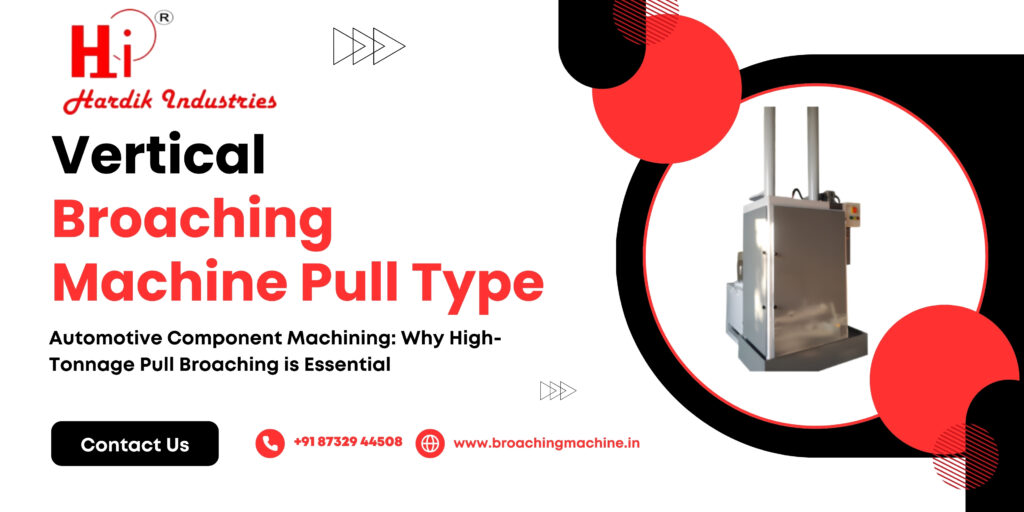
Automotive Component Machining: Why High-Tonnage Pull Broaching is Essential
In the fast-paced world of automotive and heavy machinery manufacturing, production lines demand two things above all else: absolute dimensional accuracy and rapid cycle times. Whether producing transmission gears, steering components, or internal splines for drive shafts, components must endure immense mechanical stress without failing.
When component manufacturers scale up to mass production, traditional slotting or milling methods often fall short on speed and repeatability. This is where high-tonnage vertical pull broaching becomes the backbone of the factory floor.
Let’s examine why the Vertical Broaching Machine Pull Type is indispensable for modern automotive component machining.
The Engineering Demands of Automotive Powertrains
Automotive gears and transmission hubs require complex internal configurations—such as multi-tooth involute splines and precision keyways—with tight micro-tolerances (often measured in microns).
Unlike low-volume or custom toolrooms, automotive production lines cannot afford micro-variations from part to part. Every single component coming off the line must be identical. Achieving this at high volumes introduces specific engineering hurdles:
Tool Deflection Under Load: Pulling a heavy broach through multiple parts simultaneously creates intense tensile stress. If the machine lacks adequate tonnage or guidance, the tool can wander, ruining the entire batch.
Cycle Time Pressures: Every second saved per component translates to thousands of dollars in annual plant productivity. Quick loading, automatic part clamping, and fast upward stroke returns are mandatory.
Why Vertical Pull-Type Broaching Excels in High-Volume Runs
1. Tensile Stability Prevents Tool Buckling
By pulling the broach upward through the workpiece rather than pushing it down, the tool is kept under pure tension. In physics, pulling a long, slender cutting tool eliminates the risk of compressive buckling. This structural advantage allows for higher tonnage capacity, deeper cuts, and multi-part stacking (surface broaching multiple gears in a single stroke) without sacrificing straightness.
2. Optimized Floor-Space and Ergonomics
Vertical configurations naturally have a smaller structural footprint on the shop floor compared to sprawling horizontal beds. More importantly, they allow for seamless integration with automated loading systems, hydraulic clamping jigs, and conveyor setups, drastically reducing operator fatigue and loading times.
3. Superior Surface Finish on Hardened Alloys
Automotive components are frequently forged from tough alloy steels. The smooth, uninterrupted upward pull stroke ensures a clean, chatter-free shear action that leaves behind an exceptional surface finish, minimizing or entirely eliminating secondary grinding processes.
Integrating High-Tonnage Solutions Into Your Plant
Selecting the right machine capacity depends on your material hardness, total length of cut, and the number of teeth on your broaching tool. Upgrading to a specialized vertical pull configuration allows your plant to handle heavy industrial workloads with maximum repeatability.
To explore high-efficiency systems designed for demanding production rates, view our range of Vertical Broaching Machines (Pull Type).
Looking to calculate the exact tonnage requirements for your automotive components or need a custom manufacturing setup? Contact Hardik Industries today.